Online Boiler Cleaning System
SHOCKLANCE
ShockLance is a detonation-driven shock wave cleaning system, developed by User Mühendislik, that keeps ash and slag buildup in industrial boilers under control without interrupting production.
ShockLance, which harnesses high-energy shock pulses, is designed for applications where deposits on heat transfer surfaces and in gas passages can negatively affect operating conditions.
The system’s core approach is to turn boiler cleaning from a maintenance task performed only during planned shutdowns into a controlled cleaning process that can be carried out while the boiler is in operation.
THERE IS A RISK QUIETLY GROWING INSIDE EVERY BOILER
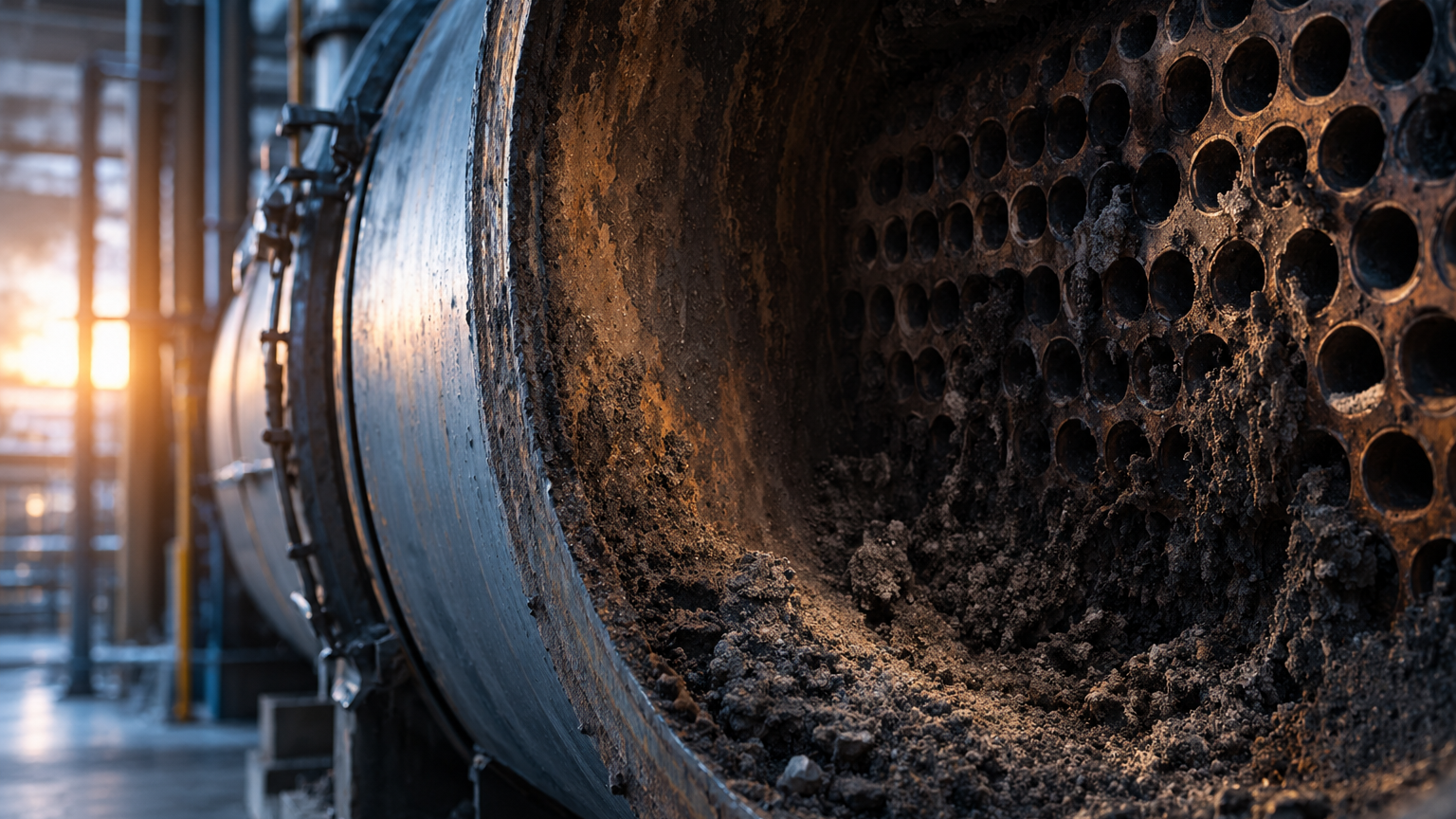
Ash, slag, and sticky deposits that build up on convection surfaces are not just “dirt.” They are a performance loss that grows unnoticed.
-
Performance Loss
Heat transfer weakens, and boiler efficiency declines gradually.
-
Temperature Imbalance
Flue gas temperatures rise, and process control becomes more difficult.
-
Increased Fan Load
Narrowed passages increase ID fan energy consumption.
-
Bridging and Blockage
Deposit bridges form across tube bundles, making intervention more difficult.
-
Unplanned Shutdowns
When buildup hits a critical level, production stops, often at the worst possible moment.
-
Rising Maintenance Costs
Manual cleaning requirements drive up labor and downtime costs.
OUR APPROACH
Isn’t to Clean, But to Manage.
Most systems step in after the boiler has already become fouled. When developing ShockLance, our starting point was different: to intervene before buildup begins to limit operations.
Through controlled, high-energy shock waves, ShockLance intervenes in problem areas while the boiler is running. Cleaning is no longer just a maintenance task performed during planned shutdowns, but a continuously operating performance strategy.
Traditional Approach
-
The boiler fouls, then gets cleaned
-
Cleaning = planned shutdown activity
-
Intervention only once performance loss is noticed
-
Dependence on manual labor and shutdowns
ShockLance Approach
-
Fouling is kept under control before it forms
-
Cleaning = continuous online process
-
Early and continuous intervention
-
Automatic, uninterrupted operation
hOW IT WORKS
The Logic Behind the Technology
ShockLance’s operating principle is based on delivering controlled, high-energy shock pulses to target zones inside the boiler.
The sudden energy released by the shock pulse helps loosen and remove ash, slag, and other deposits from surfaces.
01
Deposits form
Depending on operating conditions inside the boiler, ash, slag, and other particles begin to accumulate on heat transfer surfaces.
02
Critical zones are identified
The zones requiring intervention are assessed based on boiler geometry, process conditions, and deposit characteristics.
03
Shock pulse is applied
ShockLance sends a controlled, high-energy shock pulse to the targeted zone.
04
Deposits are loosened
The shock effect breaks down the structure of deposits clinging to the surface, helping to remove them.
05
Boiler operation continues
Depending on the system design and application, cleaning can be carried out while the boiler is running.
WHY SHOCKLANCE
What Sets Us Apart from Other Solutions
Uninterrupted Production
Cleaning without stopping the boiler or losing production.
Proactive Protection
Intervention happens before deposits reach a critical level.
Tube-Safe Cleaning
No risk of mechanical wear or erosion.
Less Manual Intervention
Operator dependency and labor costs are reduced.
Long-Term Efficiency
Stable heat transfer, steady flue gas temperatures, and longer operating periods.
Which Deposits Can It Be Used Against?
The characteristics of deposits formed inside a boiler can vary depending on the fuel used, combustion conditions, temperature, and other process parameters.
FLY ASH DEPOSITS
Fly ash particles produced by combustion and carried by flue gases can accumulate on heat transfer surfaces inside the boiler and reduce heat transfer efficiency.
SLAG
Formed when ash components soften or melt at high temperatures, slag can create hard, firmly adhering layers on boiler surfaces.
CONVECTIVE SURFACE FOULING
The accumulation of particles carried by flue gases on convective heat transfer surfaces can negatively affect heat transfer and increase resistance to gas flow.
HARDENED AND SINTERED DEPOSITS
Under high temperatures and prolonged heat exposure, deposits can harden and adhere strongly to surfaces, forming layers that are difficult to remove with conventional cleaning methods.
APPLICATION AREAS
An effective solution even in zones with a high tendency to foul.
Coal-Fired Power Plants
Biomass Power Plants
Waste-to-Energy (WtE) Plants
Industrial Boilers in Process Facilities
RDF (Refuse-Derived Fuel) Fired Boilers
OPERATIONAL PARAMETERS
Not Just Cleaning, but Operating Performance
The success of boiler cleaning is not measured only by how clean a surface looks. What matters most is how cleaning is reflected in boiler operating conditions.
Differential Pressure
Monitoring changes in gas passage conditions.
Flue Gas Temperature
Evaluating the impact of fouling on heat transfer surfaces on operation.
ID Fan Load
Tracking changes in the gas flow system.
Boiler Load
Evaluating the need for cleaning together with actual operating conditions. Parameters such as these are important.
Don’t Let Fouling Eat Away at Your Boiler’s Performance!
Let’s talk about how ShockLance can be applied at your facility.